
Aftercare timeline
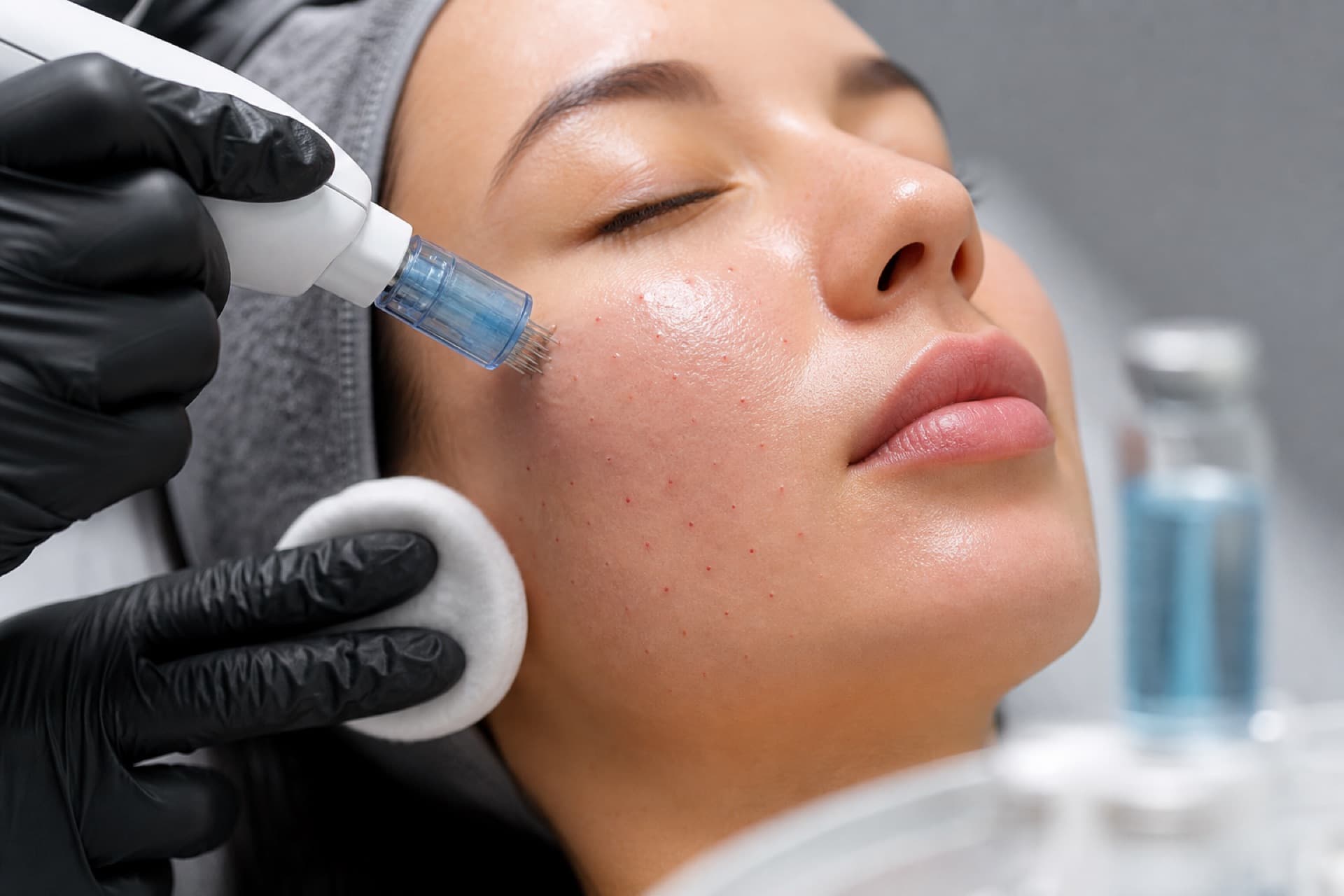
How Laser Resurfacing Is Performed
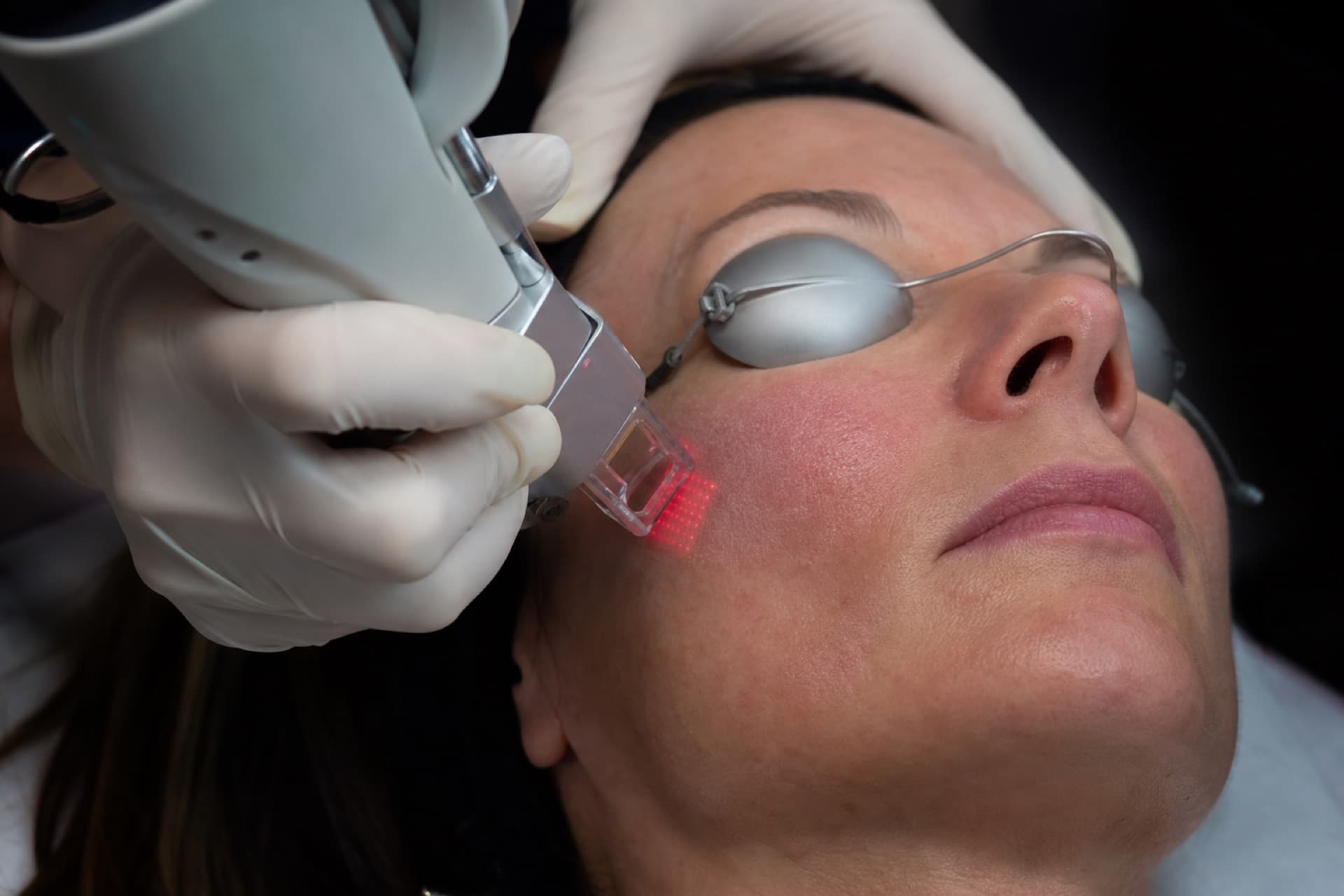
Photothermolysis & Dermal Remodeling
Laser Resurfacing
- Wavelength matched to chromophore
- PIH risk managed by phototype
- Controlled downtime via fractional healing
- Does not remove excess skin the way surgery does
Laser resurfacing is a chosen wavelength interacting with water or pigment chromophore to create microthermal zones (MTZs) or an ablative surface. The aim is pigment, fine line, acne scar and pore appearance. Phototype (Fitzpatrick), herpes history and downtime tolerance set the device and parameters. Darker skin carries higher PIH risk. Laser does not remove the skin excess of blepharoplasty or a facelift; it can also be planned as a quality tool after surgery.
Personal consultation
Muscle, volume and skin quality are assessed together; product, dose and indication are planned individually.
Procedure at a glance
Controlled thermal injury, then wound healing
In selective photothermolysis, wavelength, pulse width and fluence heat the target chromophore (water, melanin, haemoglobin) more than neighbours. Ablative CO₂ (~10 600 nm) and Er:YAG (~2940 nm) vaporise epidermal water, peeling the surface and heating dermis; collagen denaturation and later neocollagenesis are the physics behind the ‘tightening’ claim. Fractional scanning leaves intact bridges between microscopic treatment zones; re-epithelialisation takes days and infection/scar risk is lower than a fully ablative field. Non-ablative 1550/1927 nm bands spare epidermis more. IPL is polychromatic light used for pigment and redness, not classic resurfacing. Results mature over 3–6 months; there is no one-session miracle.
- 01Manstein–Anderson fractional photothermolysis changed the downtime-to-effect ratio
- 02Parameters are not a ‘brand’ — they are phototype, indication and the physician’s experience
Aftercare timeline
Risks and Safety
- 01Prolonged erythema
- 02PIH or hypopigmentation
- 03HSV reactivation
- 04Infection (bacterial / fungal)
- 05Scar or textural line (excess energy)
- 06Ectropion risk (aggressive periorbital ablative)
The right indication, anatomical planning and careful technique reduce complication risk.
Procedures
- 01
Fractional ablative (CO₂ / Er:YAG)
Water-chromophore epidermal vaporisation and dermal heat — strong for scars and marked photoageing, with longer downtime.
- 02
Non-ablative fractional
Epidermis largely spared; dermal coagulation. Less crust, a series of sessions, moderate textural gain.
- 03
Pigment and vascular protocol
Melanin or haemoglobin targets (e.g. IPL / vascular laser) — not the same physics as resurfacing; phototype limits are strict.
Frequently Asked Questions
Ready to start your journey?
Book a private consultation with Op. Dr. Hasan Kara.