Breast surgery is not one word, ‘augmentation’. Insufficient volume, skin–parenchyma ptosis, hypertrophy and asymmetry are separate diagnoses. The individual plan on our breast-surgery page is built on that split.
Augmentation: implant and fat
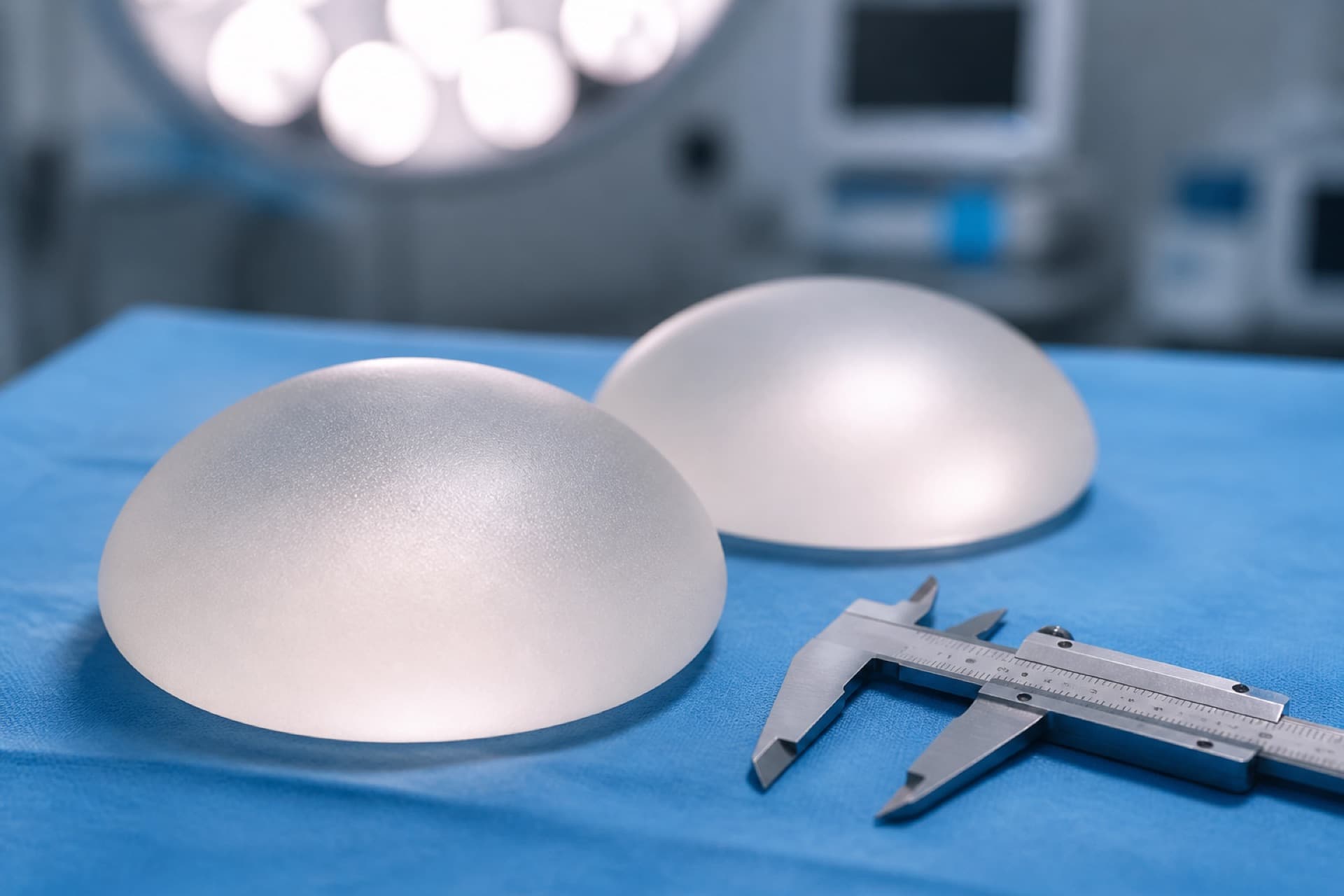
An implant gives predictable volume and shape. Plane (subglandular, dual plane, submuscular) follows tissue thickness and ptosis grade. In a very thin envelope, a superficial pocket raises rippling and visibility. Fat grafting can give a softer transition with the patient’s own tissue; take is variable, and a large volume gap may exceed what fat alone can do. The two can be combined.
Shell and gel technologies (Motiva, Mentor and others) are not a marketing rank; they are discussed as capsule, feel and projection choices. ‘The most natural implant’ is an empty phrase without tissue and plane.
Reduction and lift
Hypertrophy may carry shoulder, neck and intertrigo complaints; reduction is both aesthetic and functional. Mastopexy does not have to remove volume; it restores the areola–inframammary relationship in ptosis. Hiding ptosis by ‘filling’ with augmentation is short-lived; the skin excess remains.
Breastfeeding, screening, timing
Pregnancy and weight change reshape the breast. In a patient who still plans pregnancy, elective surgery is discussed after delivery, lactation and weight have settled — the same logic as mommy-makeover timing. Mammography and breast-health screening continue by age and risk, independent of surgery; implant presence is told to the radiologist so technique can be adapted.
Risks
Capsular contracture, haematoma, asymmetry, sensory change, rare infection, and the possibility of implant exchange over years. Fat can leave cysts and calcification that need imaging differential.
In short
Breast surgery is a diagnosis before a cup size: volume, ptosis or weight. The wrong diagnosis puts the right device in the wrong place.