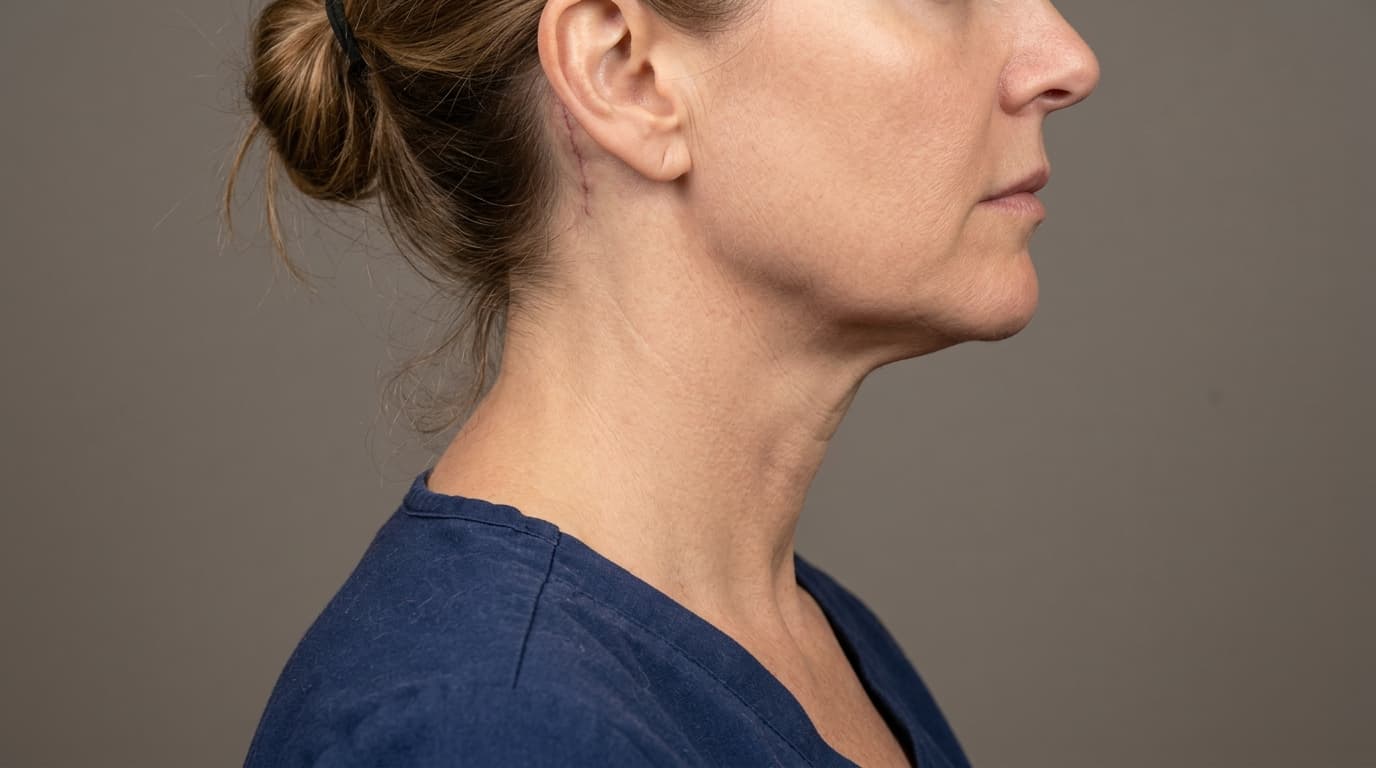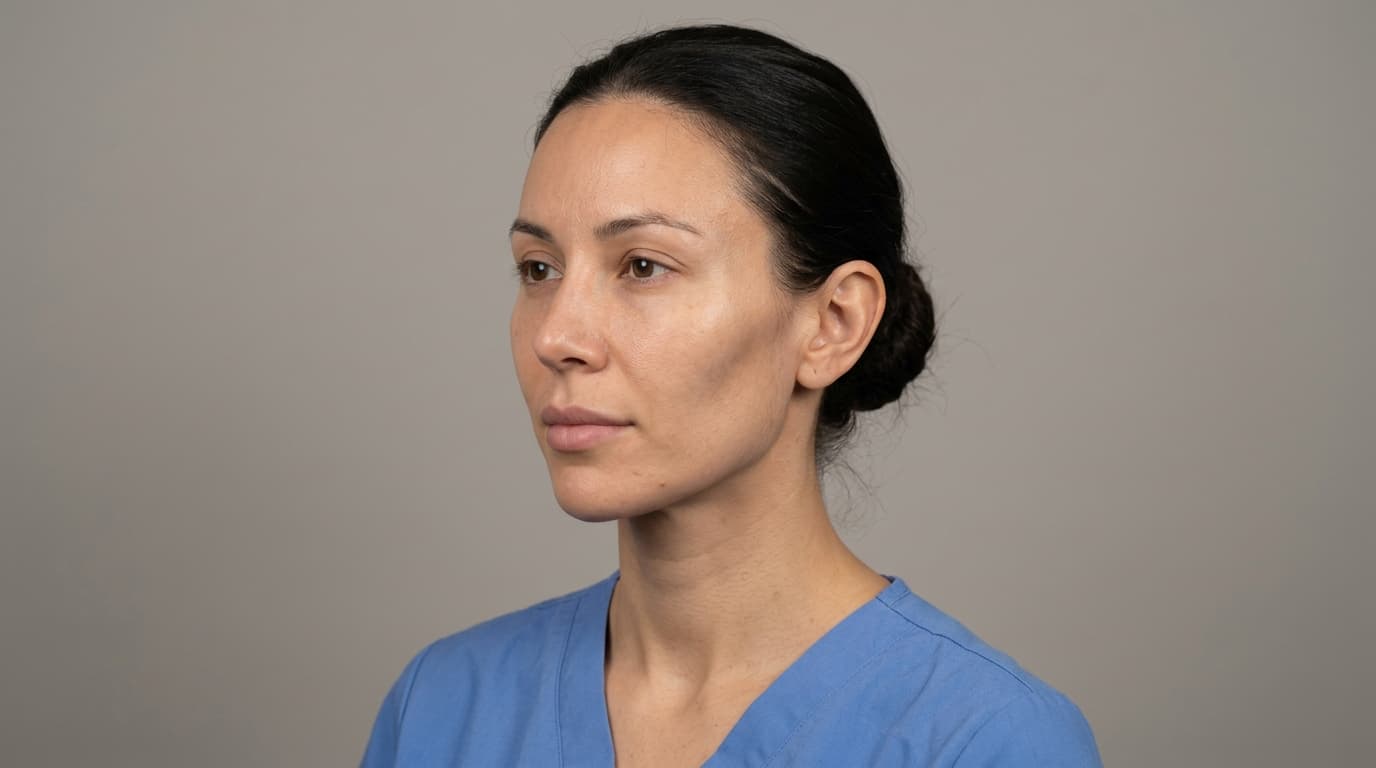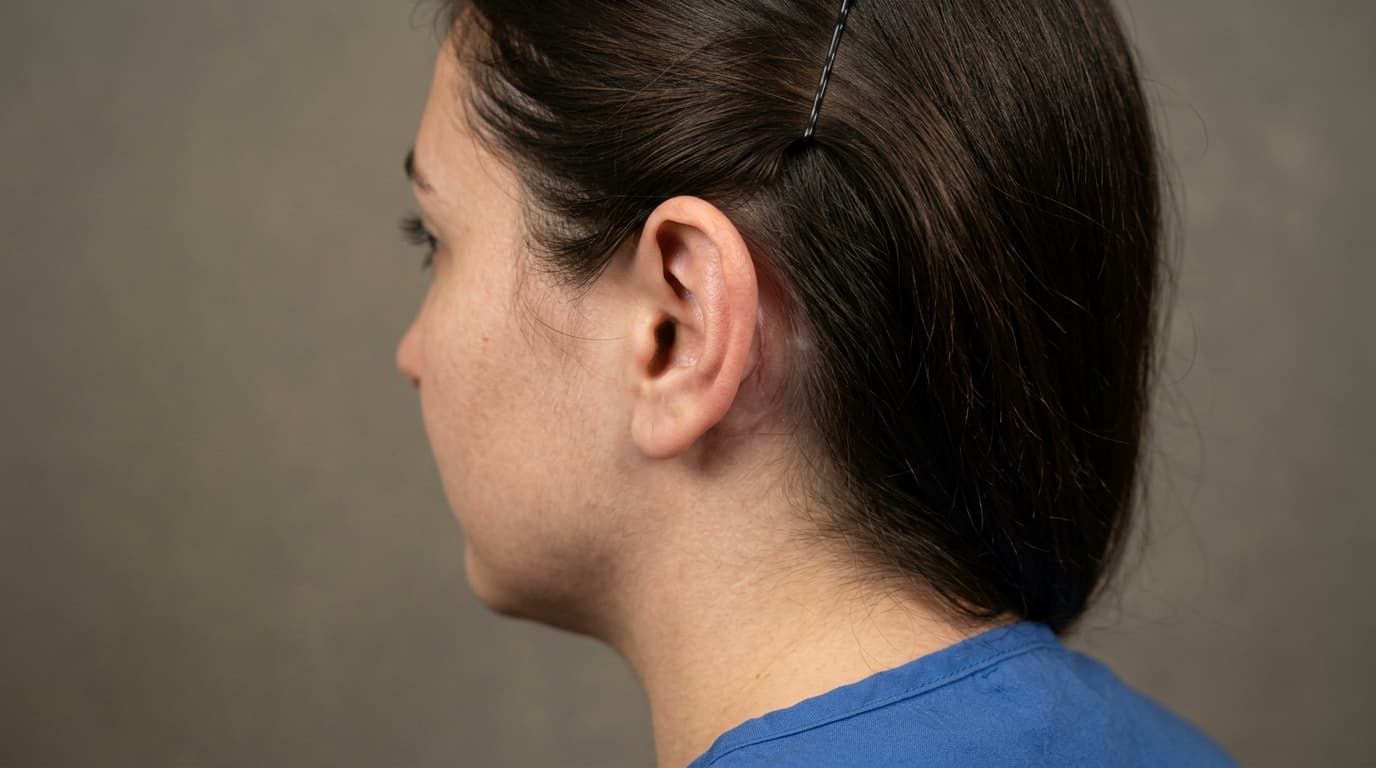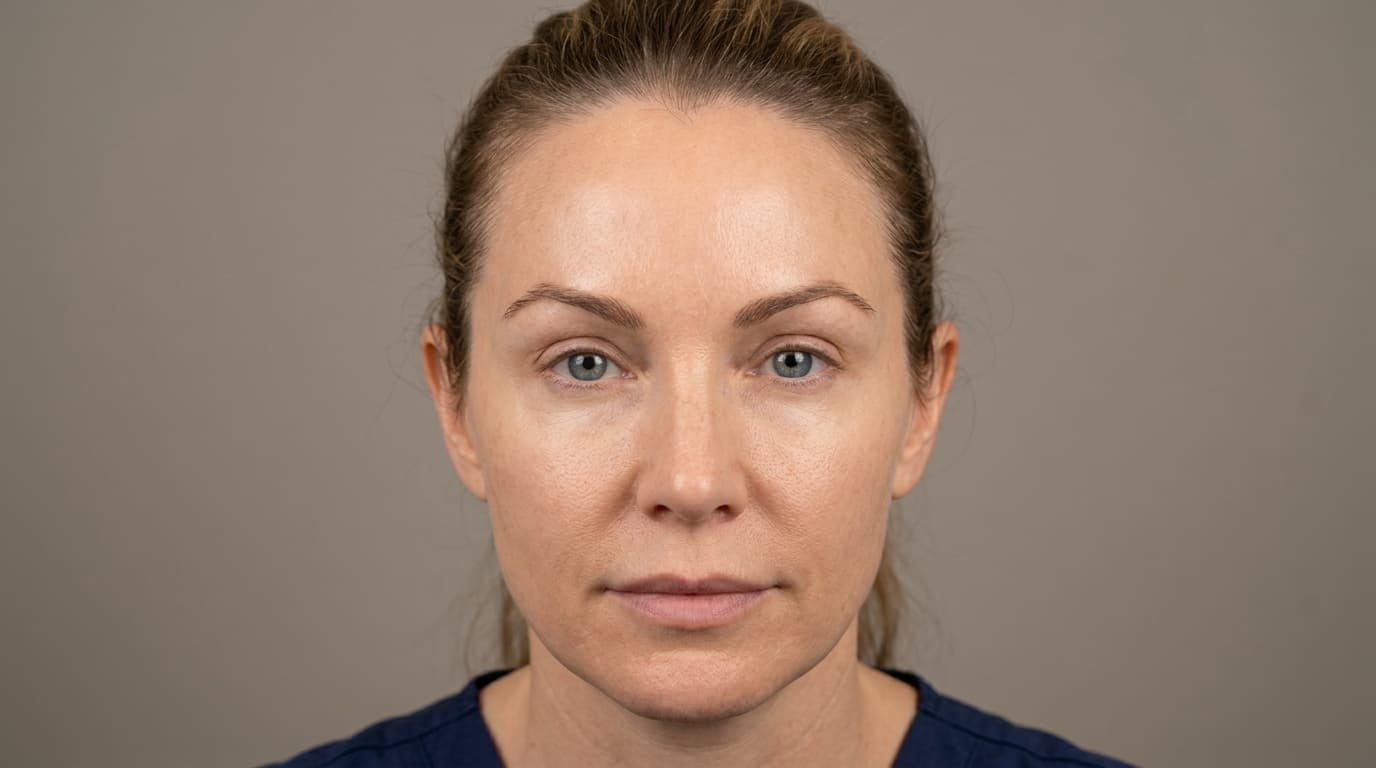
The forehead and brow mimic ‘excess’ upper-lid skin. Patients ask for blepharoplasty; if examination shows the brow has dropped below the rim, the true indication may be a brow lift or temporal lift. Botulinum can shift the frontalis–orbicularis balance by millimetres; it does not carry a descended brow over bone.
Surgical vectors
Gliding and endoscopic approaches move the brow up and laterally through small incisions. A temporal lift targets lateral brow and temple soft tissue. Limited suspension through a lid incision gives a small vector without an extra scar; it is not enough for major ptosis. Our brow-lift page holds that spectrum surgically.
The toxin illusion
Weakening lateral orbicularis can give frontalis a relative advantage and lift the tail by millimetres. Excess medial glabellar dose drops the medial brow. That is a dynamic adjustment; it ends in 3–6 months. It does not replace surgical ptosis.
Order with blepharoplasty
Brow first, then lid — or the same session — follows examination. Upper-lid skin taken without seeing the brow can make closure difficult. Conversely, a patient with only dynamic forehead lines is not sold brow surgery.
A thread lift claims limited temporal suspension; it does not release ligaments. It is not a ‘light’ endoscopic or deep-plane operation. In heavy brow ptosis, threads spend money on the wrong layer, as a misplaced blepharoplasty would.
Recovery and risk
Swelling and forehead tightness last days to weeks after endoscopic and gliding plans. Hairline scars and rare alopecia are discussed. Excess lateralisation can leave a startled look; that is why the vector is measured. Ptosis after toxin is temporary; a surgical vector is lasting — which does not make ‘try botox, skip surgery’ true for every face.
In short
Brow position is a bone and ligament vector; botulinum is muscle balance. Upper-lid surgery is not planned without reading both.