A patient who wants glow and texture often faces three names: PRP, mesotherapy, laser. All three are stuffed under a ‘non-surgical rejuvenation’ marketing roof. Their biologies differ; our PRP, mesotherapy and laser pages keep that split in clinical language.
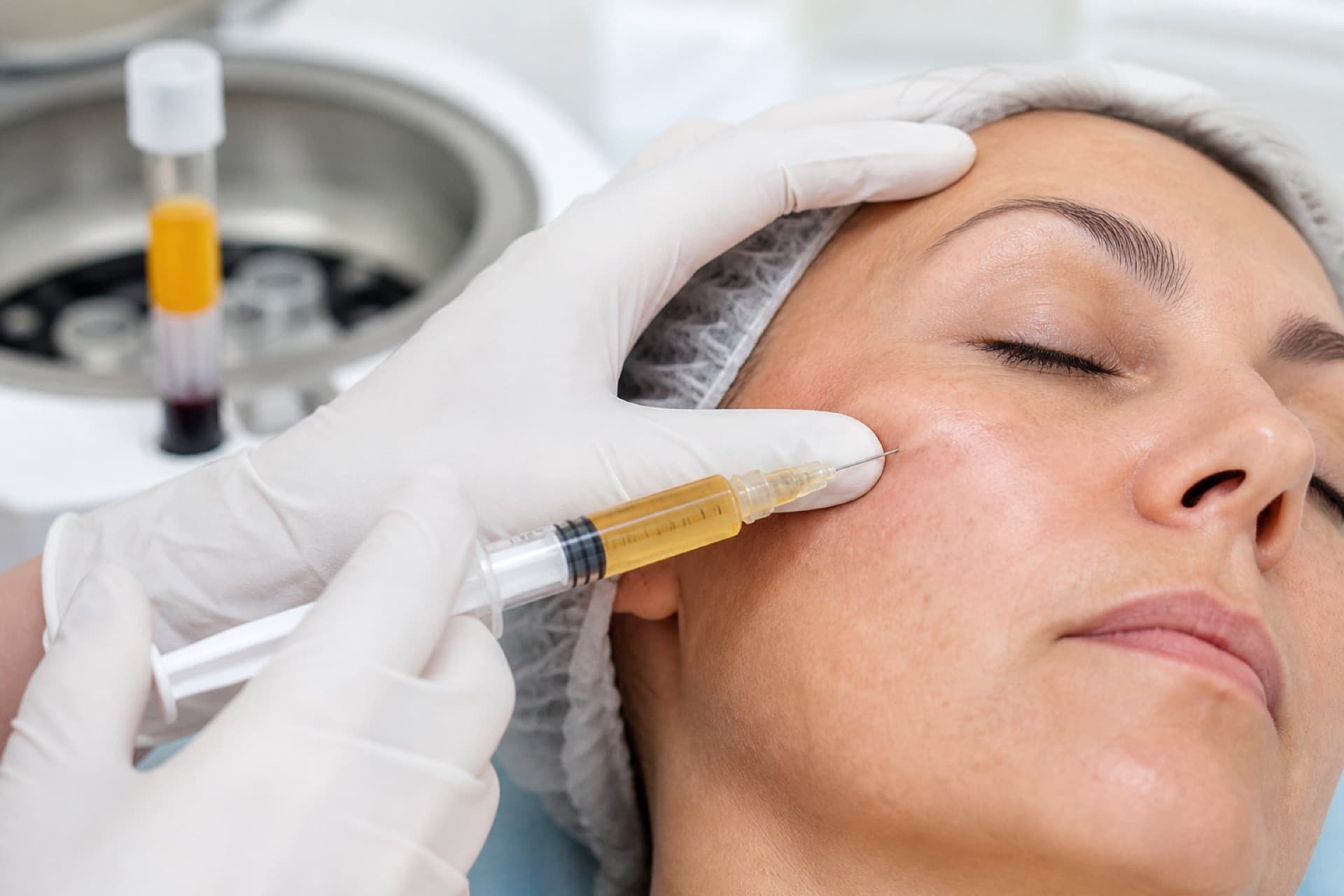
PRP: an autologous cascade
Venous blood is centrifuged and a platelet concentrate returned to the same person. Alpha granules release PDGF, TGF-β, VEGF. It is not a stem-cell product. It does not give volume. There is modest evidence as an adjunct to medical care in androgenetic alopecia; it does not change DHT physiology. Glow is often reported on skin; there is no deep-plane vector.
Mesotherapy: an intradermal cocktail
Non-cross-linked HA, vitamins and amino acids are delivered to the dermis in micro-doses. It is exogenous; allergy and a simpler mix are discussed. Evidence suffers from heterogeneous cocktails and small series. The expectation is hydration and fine line, not millimetric lift. One session is not a cure.
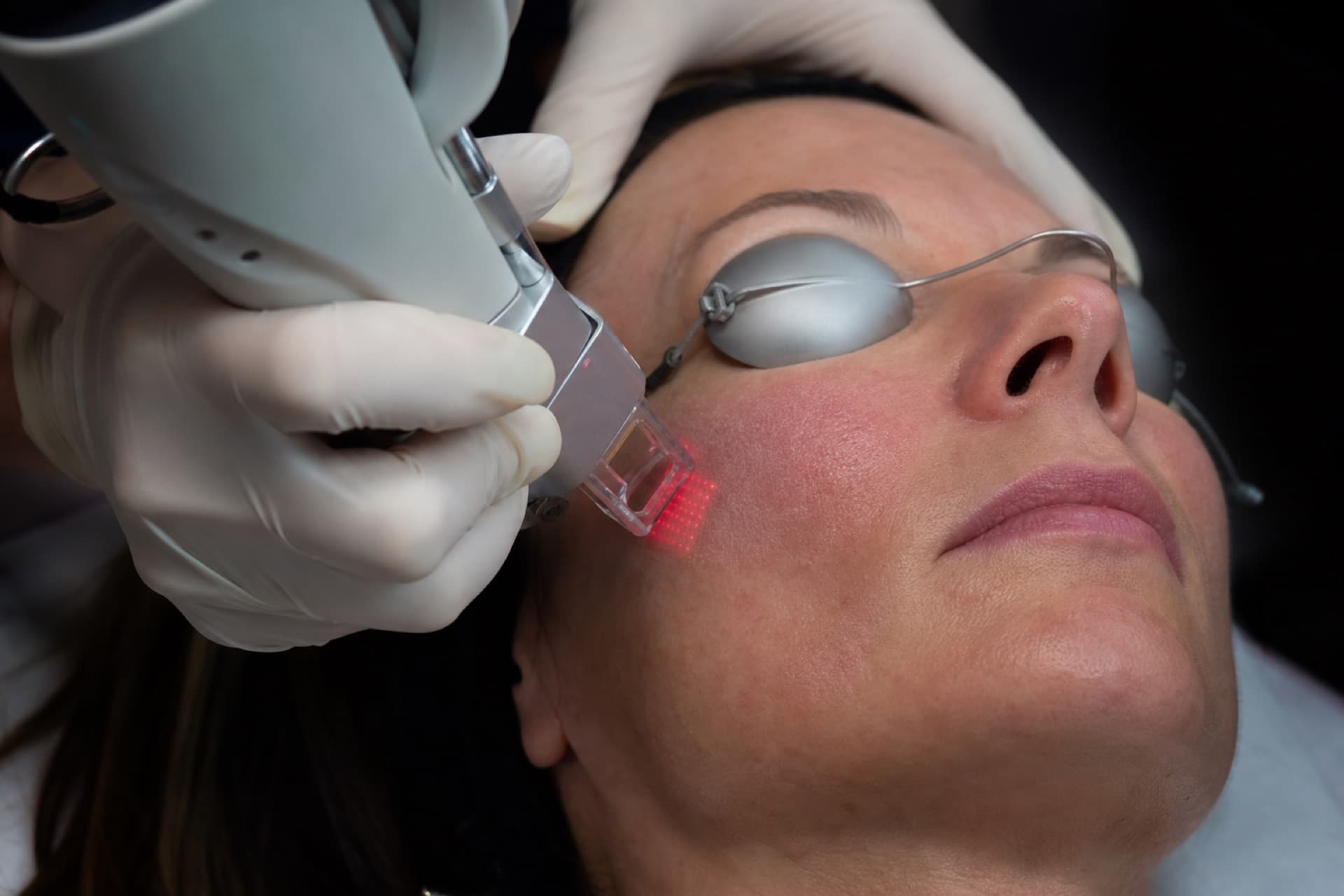
Laser: physical remodeling
A chromophore–energy match reorganises dermal collagen. Evidence rests on wound-healing physics. Phototype sets PIH risk. It does not excise excess skin.
How are they sequenced?
Diagnosis first: if pigment and scar lead, laser comes forward. If dehydration and glow lead, mesotherapy or PRP. On the scalp, medical background (a minoxidil/finasteride discussion) comes before PRP or mesotherapy. Toxin may share a day in a different plane; sequence with HA filler is a physician decision.
Stacking all three in one visit for ‘maximum effect’ raises inflammation and pigment risk; it does not speed physiology.
In short
PRP is an autologous stimulus. Mesotherapy is intradermal care. Laser is a controlled wound. None of them is a facelift or filler volume.